Eyeglass Strap With Make America Great Again
| Glasses | |
|---|---|
 A modern pair of glasses | |
| Other names | Eyeglasses, spectacles |
| Specialty | Ophthalmology, optometry |
Glasses, besides known as eyeglasses or spectacles, are vision eyewear, consisting of clear lenses mounted in a frame that holds them in front of a person'south eyes, typically utilizing a bridge over the olfactory organ and hinged arms (known as temples or temple pieces) which residual over the ears.
Glasses are typically used for vision correction, such every bit with reading spectacles and glasses used for nearsightedness; however, without the specialized lenses, they are sometimes used for cosmetic purposes.
Safety spectacles provide center protection against flying droppings for construction workers or lab technicians; these glasses may have protection for the sides of the optics as well as in the lenses. Some types of safety glasses are used to protect against visible and near-visible calorie-free or radiations. Spectacles are worn for eye protection in some sports, such as squash.
Glasses wearers may utilize a strap to prevent the glasses from falling off. Wearers of glasses that are used only part of the fourth dimension may accept the glasses fastened to a cord that goes around their neck, to forestall the loss of the spectacles and breaking. The loss of glasses would be detrimental to those working in these conditions.
Sunglasses allow for better vision in brilliant daylight, and may protect ane's eyes against impairment from excessive levels of ultraviolet light. Typical sunglasses lenses are tinted for protection against bright calorie-free or polarized to remove glare; photochromatic glasses are blacked out or lightly tinted in dark or indoor weather, simply turn into sunglasses when they come in contact with ultraviolet light. Most over the counter sunglasses exercise not accept cosmetic power in the lenses; however, special prescription sunglasses tin be fabricated. People with conditions that have photophobia as a primary symptom (similar sure migraine disorders or Irlen syndrome) oft wearable sunglasses or precision tinted glasses, even indoors and at dark.
Specialized glasses may be used for viewing specific visual information, for example 3D spectacles for 3D films (stereoscopy). Sometimes glasses are worn purely for fashion or aesthetic purposes. Even with glasses used for vision correction, a wide range of fashions are available, using plastic, metal, wire, and other materials for frames.
Types [edit]
Glasses can be marked or constitute by their main function, simply also announced in combinations such as prescription sunglasses or safety spectacles with enhanced magnification.
Corrective [edit]

Cosmetic lenses are used to right refractive errors past bending the light entering the eye in order to alleviate the effects of conditions such every bit nearsightedness (myopia), farsightedness (hypermetropia) or astigmatism. The ability of one'southward eyes to adapt their focus to near and distant focus alters over time. A common condition in people over 40 years old is presbyopia, which is caused by the centre's crystalline lens losing elasticity, progressively reducing the ability of the lens to accommodate (i.e. to focus on objects shut to the eye). Few people accept a pair of eyes that show exactly equal refractive characteristics; one eye may need a "stronger" (i.east. more refracting) lens than the other.
Corrective lenses bring the image back into focus on the retina. They are made to adjust to the prescription of an ophthalmologist or optometrist. A lensmeter tin can be used to verify the specifications of an existing pair of spectacles. Cosmetic eyeglasses tin significantly better the life quality of the wearer. Not only do they heighten the wearer's visual experience, just can besides reduce issues that issue from heart strain, such as headaches or squinting.
The most common blazon of corrective lens is "single vision", which has a uniform refractive index. For people with presbyopia and hyperopia, bifocal and trifocal glasses provide ii or three different refractive indices, respectively, and progressive lenses have a continuous slope.[1] Lenses tin also exist manufactured with high refractive indices, which allow them to exist more lightweight and thinner than their counterparts with "low" refractive indices.
Reading glasses provide a split set of glasses for focusing on close-past objects. Reading glasses are bachelor without prescription from drugstores, and offer a cheap, practical solution, though these have a pair of uncomplicated lenses of equal power, and so will not correct refraction issues similar astigmatism or refractive or prismatic variations betwixt the left and correct eye. For the total correction of the individual'southward sight, glasses complying to a recent ophthalmic prescription are required.
People who need glasses to see often have corrective lens restrictions on their driver'southward licenses that require them to habiliment their glasses every fourth dimension they drive or risk fines or jail time.
Some militaries issue prescription spectacles to servicemen and women. These are typically GI glasses. Many state prisons in the United states result glasses to inmates, often in the class of articulate plastic aviators.
Adjustable-focus eyeglasses might be used to replace bifocals or trifocals, or might exist used to produce cheaper single-vision glasses (since they don't have to be custom-manufactured for every person).
Pinhole spectacles are a type of corrective spectacles that do not use a lens. Pinhole spectacles do not really refract the low-cal or change focal length. Instead, they create a diffraction limited system, which has an increased depth of field, similar to using a pocket-sized discontinuity in photography. This form of correction has many limitations that prevent it from gaining popularity in everyday utilise. Pinhole glasses can be made in a DIY style by making pocket-size holes in a piece of bill of fare which is and then held in front end of the eyes with a strap or cardboard arms.
Prophylactic [edit]
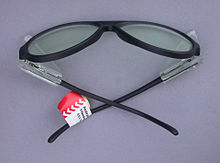
Safety spectacles are worn to protect the optics in various situations. They are made with suspension-proof plastic lenses to protect the eye from flying debris or other matter. Construction workers, factory workers, machinists and lab technicians are ofttimes required to wear safety glasses to shield the eyes from flying debris or hazardous splatters such every bit blood or chemicals. As of 2017, dentists and surgeons in Canada and other countries are required to wear prophylactic spectacles to protect against infection from patients' blood or other trunk fluids. There are also prophylactic glasses for welding, which are styled like wraparound sunglasses, but with much darker lenses, for use in welding where a full-sized welding helmet is inconvenient or uncomfortable. These are ofttimes called "flash goggles" because they provide protection from welding flash. Nylon frames are usually used for protective eyewear for sports considering of their lightweight and flexible backdrop. Unlike most regular spectacles, safety glasses oft include protection beside the eyes as well equally in front end of the eyes.
Sunglasses [edit]

Sunglasses provide more comfort and protection against bright light and oftentimes confronting ultraviolet (UV) light. To properly protect the eyes from the dangers of UV light, sunglasses should accept UV-400 blocker to provide good coverage confronting the unabridged light spectrum that poses a danger.[2]
Light polarization is an added feature that tin be applied to sunglass lenses. Polarization filters are positioned to remove horizontally polarized rays of light, which eliminates glare from horizontal surfaces (assuasive wearers to see into water when reflected light would otherwise overwhelm the scene). Polarized sunglasses may present some difficulties for pilots since reflections from water and other structures ofttimes used to approximate altitude may be removed. Liquid-crystal displays emit polarized light, making them sometimes difficult to view with polarized sunglasses. Sunglasses may be worn just for aesthetic purposes, or only to hide the eyes. Examples of sunglasses that were popular for these reasons include tea shades and mirrorshades. Many blind people wear nearly opaque spectacles to hide their eyes for cosmetic reasons. Many people with light sensitivity weather condition wear sunglasses or other tinted spectacles to brand the light more tolerable.
Sunglasses may as well have corrective lenses, which requires a prescription. Clip-on sunglasses or sunglass clips can be attached to another pair of spectacles. Some wrap-around sunglasses are large plenty to be worn over peak of another pair of glasses. Otherwise, many people opt to habiliment contact lenses to right their vision so that standard sunglasses can exist used.
Mixed doubleframe [edit]

Doubleframe eyewear with ane set up of lenses on the moving frame and another pair of lenses on a stock-still frame (optional).
The double frame uplifting glasses have one moving frame with one pair of lenses and the bones fixed frame with some other pair of lenses (optional), that are continued by four-bar linkage. For instance, sunday lenses could exist easily lifted upwardly and downwardly while mixed with myopia lenses that ever stay on. Presbyopia lenses could be besides combined and easily removed from the field of view if needed without taking off glasses.
3D glasses [edit]
The illusion of three dimensions on a two-dimensional surface tin can be created by providing each eye with dissimilar visual data. 3D glasses create the illusion of three dimensions by filtering a signal containing information for both optics. The point, often calorie-free reflected off a movie screen or emitted from an electronic brandish, is filtered and so that each eye receives a slightly unlike image. The filters only work for the type of signal they were designed for.
Anaglyph 3D glasses have a different colored filter for each eye, typically reddish and blue or cherry and green. A polarized 3D system on the other hand uses polarized filters. Polarized 3D glasses allow for color 3D, while the cherry-red-blue lenses produce an image with distorted coloration. An active shutter 3D arrangement uses electronic shutters. Caput-mounted displays can filter the bespeak electronically and then transmit light straight into the viewer's eyes.
Anaglyph and polarized glasses are distributed to audiences at 3D movies. Polarized and active shutter glasses are used with many habitation theaters. Head-mounted displays are used by a unmarried person, only the input bespeak can be shared between multiple units.
Magnification (bioptics) [edit]
Spectacles can besides provide magnification that is useful for people with vision impairments or specific occupational demands. An case would exist bioptics or bioptic telescopes which have small telescopes mounted on, in, or behind their regular lenses. Newer designs use smaller lightweight telescopes, which can be embedded into the cosmetic drinking glass and improve aesthetic appearance (mini telescopic spectacles). They may accept the form of self-contained glasses that resemble goggles or binoculars, or may exist fastened to existing glasses.
Yellowish-tinted figurer/gaming glasses [edit]
Yellow tinted spectacles are a type of glasses with a minor xanthous tint. They perform minor color correction, on elevation of reducing eyestrain due to lack of blinking. They may also be considered pocket-size corrective unprescribed spectacles.[3] Depending on the company, these computer or gaming glasses can besides filter out high energy blue and ultra-violet low-cal from LCD screens, fluorescent lighting, and other sources of calorie-free. This allows for reduced eye-strain.[4] These spectacles tin can be ordered equally standard or prescription lenses that fit into standard optical frames.[v]
Bluish-light blocking glasses [edit]
Eyeglasses that filter out blue calorie-free from computers, smartphones and tablets are condign increasingly popular in response to concerns well-nigh problems acquired by bluish calorie-free overexposure.[6] The problems claimed range from dry eyes to eye strain, sleep bike disruption, upwards to macular degeneration which can cause fractional blindness.[half-dozen] Merely enquiry shows no measurable ultraviolet radiation from calculator monitors.[6] [7] Long hours of computer use may cause heart strain, not bluish light.[6] [8] [nine] [10] Many centre symptoms caused by computer use will lessen afterward stop using the reckoner.[6] Decreasing evening screen fourth dimension and setting devices to nighttime style will improve sleep.[8] [xi] Blue light from computers will not lead to centre diseases, including macular degeneration.[8] [12] [13]
The American University of Ophthalmology (AAO) doesn't recommend special eyewear for computer use,[6] [nine] although it recommends using prescription glasses measured specifically for figurer screen distance (depending on individuals, only possibly 20-26 inches from the face up), which are not the aforementioned as "blue-low-cal blocking" spectacles.[fourteen] The position of the College of Optometrists (Uk) is "the all-time scientific evidence currently bachelor does not support the use of blueish-blocking spectacle lenses in the general population to improve visual performance, alleviate the symptoms of eye fatigue or visual discomfort, improve slumber quality or conserve macula wellness."[15] However, some users practise find benefits, and some eye professionals believe they accept benefits, at least for reducing heart strain.[ix]
Anti-glare protection glasses [edit]
Anti-glare protection glasses, or blueish-light spectacles, can reduce the reflection of calorie-free that enters the optics. Blueish-light blocking glasses are designed to filter or block bluish light and reduce the middle strain from it, likely coming from electronic LED screens.[xvi] The lenses are given an anti-glare blanket to foreclose reflections of light under different lighting conditions. Past reducing the amount of glare on your optics, vision can exist improved.[17]
The anti-glare likewise applies to the outer drinking glass, thus assuasive for better centre contact.[17]
Frames [edit]

Glasses, c. 1920s, with springy cablevision temples
The ophthalmic frame is the part of a pair of glasses that is designed to hold the lenses in the proper position. Ophthalmic frames come in a multifariousness of styles, sizes, materials, shapes, and colors.[18]
Parts [edit]
- pair of centre wires or rims surrounding and holding the lenses in place
- bridge which connects the two eye wires
- chassis, the combination of the center wires and the span
- top bar or brow bar, a bar just to a higher place the bridge providing structural back up and/or style enhancement (country/Grandpa style). The addition of a top bar makes a pair of glasses aviator eyeglasses
- pair of brows or caps, plastic or metal caps which fit over the summit of the center wires for style enhancement and to provide boosted support for the lenses. The improver of brows makes a pair of glasses browline glasses
- pair of nose pads that allows a comfy resting of the eye wires on the olfactory organ
- pair of pad arms connect the nose pads to the center wires
- pair of temples (earpieces) on either side of the skull
- pair of temple tips at the ends of the temples
- pair of stop pieces connect the heart wires via the hinges to the temples
- pair of frame-front end pieces
- pair of hinges connect the end pieces to the temples, assuasive a swivel movement. Spring-loaded flex hinges are a variant that is equipped with a small spring that affords the temples a greater range of motility and does not limit them to the traditional, ninety-caste angle.
Temple types [edit]
- Skull temples: bend down backside the ears, follow the profile of the skull and rest evenly against the skull
- Library temples: generally straight and do non bend down behind the ears. Hold the glasses primarily through light force per unit area against the side of the skull
- Convertible temples: used either equally library or skull temples depending on the bent
- Riding bow temples: curve around the ear and extend down to the level of the ear lobe. Used more often than not on athletic, children'south, and industrial safety frames;
- Comfort cable temples: similar to the riding bow, but fabricated from a springy cable of coiled metal, sometimes within a plastic or silicone sleeve. The tightness of the curl can exist adjusted along its whole length, allowing the frame to fit the wearer'south ear bend perfectly. Used for physically active wearers, children, and people with loftier prescriptions (heavy lenses).[19] [20] See the epitome of 1920s frames higher up.
Materials [edit]
Plastic and polymer [edit]
- Cellulose acetate
- Optyl, a type of hypoallergenic material made especially for eyeglass frames. It features a type of elasticity that returns the textile to its original shape.
- Cellulose propionate, a molded, durable plastic
- 3D-printed plastic using super-fine polyamide powder and Selective laser sintering processes – see Mykita Mylon (The frames tin can be iii-D printed past Fused Filament Fabrication for pennies of ABS, PLA or nylon)[21]
- Nylon
Metal [edit]
Various metals and alloys may be used to brand glasses such equally golden, silvery, aluminum, beryllium, stainless steel, titanium, monel and nickel titanium.
Natural material [edit]
Also natural materials may be used such as wood, bone, ivory, leather and semi-precious or precious stones.
Corrective lens shape [edit]

Modern spectacles with a rectangular lens shape
Cosmetic lenses can be produced in many unlike shapes from a circular lens called a lens blank. Lens blanks are cut to fit the shape of the frame that will hold them. Frame styles vary and manner trends modify over time, resulting in a multitude of lens shapes. For lower power lenses, there are few restrictions which allow for many trendy and fashionable shapes. Higher power lenses can cause distortion of peripheral vision and may become thick and heavy if a large lens shape is used. However, if the lens becomes too small, the field of view tin be drastically reduced.
Bifocal, trifocal, and progressive lenses generally require a taller lens shape to leave room for the different segments while preserving an adequate field of view through each segment. Frames with rounded edges are the most efficient for correcting myopic prescriptions, with perfectly circular frames being the most efficient. Earlier the advent of eyeglasses as a manner item, when frames were constructed with only functionality in mind, nearly all eyeglasses were either round, oval, rectangular or curved octagons. It was not until glasses began to be seen equally an accompaniment that different shapes were introduced to exist more aesthetically pleasing than functional.
History [edit]
Precursors [edit]


Scattered evidence exists for employ of visual aid devices in Greek and Roman times, most prominently the use of an emerald by emperor Nero as mentioned by Pliny the Elder.[22]
The utilise of a convex lens to form an enlarged/magnified image was most likely described in Ptolemy's Optics (which survives only in a poor Arabic translation). Ptolemy'due south description of lenses was commented upon and improved by Ibn Sahl (10th century) and most notably past Alhazen (Volume of Optics, c. 1021). Latin translations of Ptolemy'southward Eyes and of Alhazen became available in Europe in the 12th century, congruent with the development of "reading stones".
Robert Grosseteste'south treatise De iride ("On the Rainbow"), written between 1220 and 1235, mentions using optics to "read the smallest letters at incredible distances".[23] A few years later in 1262, Roger Bacon is likewise known to take written on the magnifying backdrop of lenses.[24] [25] The development of the first eyeglasses took place in northern Italy in the second one-half of the 13th century.[26]
Independently of the development of optical lenses, some cultures developed "sunglasses" for middle protection, without whatsoever corrective properties.[27] For example, flat panes of smoky quartz were used in 12th-century Mainland china, and the Inuit accept used snow goggles for centre protection.[a]
Invention [edit]

The earliest recorded comment on the use of lenses for optical purposes was made in 1268 by Roger Salary, who was too the first European to have described in detail the process of making gunpowder.[29]
The first eyeglasses were estimated to have been made in northern Italy, well-nigh likely in Pisa, past most 1290: In a sermon delivered on 23 February 1306, the Dominican friar Giordano da Pisa (c. 1255–1311) wrote "It is not nonetheless twenty years since there was found the art of making eyeglasses, which make for adept vision ... And it is so short a time that this new art, never earlier extant, was discovered. ... I saw the 1 who showtime discovered and practiced it, and I talked to him."[30]
Giordano'south colleague Friar Alessandro della Spina of Pisa (d. 1313) was soon making eyeglasses. The Ancient Chronicle of the Dominican Monastery of St. Catherine in Pisa records: "Eyeglasses, having first been made by someone else, who was unwilling to share them, he [Spina] made them and shared them with everyone with a cheerful and willing heart."[31] Venice speedily became an of import center of industry, especially due to using the high quality glass made at Murano.[32] Past 1301, there were gild regulations in Venice governing the sale of eyeglasses.[33] and a separate social club of Venetian spectacle makers was formed in 1320.[32] In the fourteenth century they were very common objects: Francesco Petrarca says in ane of his letters that, until he was 60, he didn't need spectacles,[34] [35] and Franco Sacchetti mentions them oftentimes in his Trecentonovelle.


The earliest pictorial prove for the use of eyeglasses is Tommaso da Modena's 1352 portrait of the cardinal Hugh de Provence reading in a scriptorium. Another early on example would exist a depiction of eyeglasses found north of the Alps in an altarpiece of the church of Bad Wildungen, Germany, in 1403. These early on spectacles had convex lenses that could correct both hyperopia (farsightedness), and the presbyopia that unremarkably develops equally a symptom of aging. Although concave lenses for myopia (virtually-sightedness) had fabricated their first appearance in the mid-15th century,[32] it was not until 1604 that Johannes Kepler published the first correct caption as to why convex and concave lenses could correct presbyopia and myopia.[b]
Early frames for spectacles consisted of two magnifying spectacles riveted together by the handles so that they could grip the nose. These are referred to every bit "rivet glasses". The primeval surviving examples were found under the floorboards at Kloster Wienhausen, a convent near Celle in Deutschland; they have been dated to circa 1400.[38]
The globe's first spectacle specialist shop opened in Strasbourg (then Holy Roman Empire, now France) in 1466.[39]
Other claims [edit]
The 17th century merits, by Francesco Redi, that Salvino degli Armati of Florence invented eyeglasses, in the 13th century, has been exposed every bit erroneous.[40] [41]
Marco Polo is mistakenly claimed to have encountered eyeglasses during his travels in Red china in the 13th century. However, no such prove appears in his accounts.[42] [43] Indeed, the earliest mentions of eyeglasses in China occur in the 15th century and those Chinese sources state that eyeglasses were imported.[44]
In 1907 Professor Berthold Laufer speculated, in his history of spectacles, that for glasses to be mentioned in the literature of China and Europe at approximately the same time it was probable that they were non invented independently, and later ruling out the Turks, proposed Bharat as a location.[45] [c] However, Joseph Needham speculated that the mention of glasses in the Chinese manuscript Laufer used "in part" to credit the prior invention of them in Asia did not exist in older versions of that manuscript, and the reference to them in later versions was added during the Ming dynasty.[46]
In 1971 Rishi Agarwal, in an commodity in the British Journal of Ophthalmology, states that Vyasatirtha was observed in possession of a pair of glasses in the 1520s, he argues that it "is, therefore, most probable that the apply of lenses reached Europe via the Arabs, as did Hindu mathematics and the ophthalmological works of the ancient Hindu surgeon Sushruta",[47] but all dates are given well later on the existence of eyeglasses in Italy was established, and there had been significant shipments of eyeglasses from Italy to the Middle East, with 1 shipment equally large every bit 24,000 spectacles.[48]
Later developments [edit]
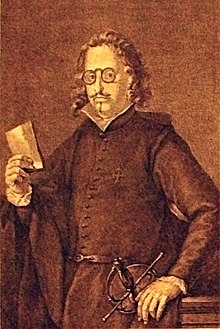
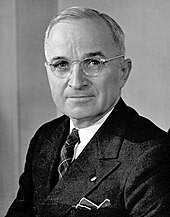
The American scientist Benjamin Franklin, who suffered from both myopia and presbyopia, invented bifocals. Historians have from time to fourth dimension produced show to suggest that others may have preceded him in the invention; nonetheless, a correspondence between George Whatley and John Fenno, editor of The Gazette of the The states, suggested that Franklin had indeed invented bifocals, and peradventure fifty years earlier than had been originally idea.[49] The starting time lenses for correcting astigmatism were designed past the British astronomer George Blusterous in 1825.[50]
Over time, the structure of frames for glasses also evolved. Early on eyepieces were designed to be either held in identify by hand or by exerting force per unit area on the nose (pince-nez). Girolamo Savonarola suggested that eyepieces could be held in place by a ribbon passed over the wearer's head, this in turn secured by the weight of a hat. The mod style of glasses, held by temples passing over the ears, was developed one-time before 1727, possibly by the British optician Edward Scarlett. These designs were non immediately successful, still, and various styles with attached handles such as "scissors-glasses" and lorgnettes were likewise fashionable from the second half of the 18th century and into the early 19th century.
In the early 20th century, Moritz von Rohr and Zeiss (with the assistance of H. Boegehold and A. Sonnefeld[51]) developed the Zeiss Punktal spherical point-focus lenses that dominated the eyeglass lens field for many years. In 2008, Joshua Silver designed eyewear with adjustable cosmetic spectacles. They work by using a built-in syringe to pump a silicone solution into a flexible lens.[52]
Despite the increasing popularity of contact lenses and light amplification by stimulated emission of radiation cosmetic eye surgery, glasses remain very common, as their technology has improved. For instance, it is at present possible to purchase frames made of special memory metallic alloys that return to their right shape after beingness bent. Other frames take leap-loaded hinges. Either of these designs offer dramatically better power to withstand the stresses of daily clothing and the occasional blow. Modern frames are also oft made from strong, light-weight materials such every bit titanium alloys, which were not bachelor in before times.
In fashion [edit]

In the 1930s, "spectacles" were described every bit "medical appliances".[53] Wearing spectacles was sometimes considered socially humiliating. In the 1970s, fashionable glasses started to become available through manufacturers, and governments as well recognized the demand for stylized eyewear.[53]
Graham Pullin describes how devices for disability, like glasses, have traditionally been designed to camouflage against the skin and restore ability without beingness visible.[53] In the past, design for disability has "been less virtually projecting a positive paradigm as about trying not to project an paradigm at all".[53] Pullin uses the example of spectacles, traditionally categorized as a medical device for "patients", and outlines how they are at present described equally eyewear: a fashionable accompaniment.[53] Much like other style designs and accessories, eyewear is created by designers, has reputable labels, and comes in collections, past season and designer.[53] In recent years information technology has get more common for consumers to purchase eyewear with not-prescription lenses every bit a way accessory.[53]
Club and culture [edit]
Market place [edit]
The market for spectacles has been characterized as having highly inelastic demand. Advertisement restrictions in the U.s.a., for example, have correlated with higher prices, suggesting that adverts make the spectacles market more price-competitive.[54] It has too been claimed to be monopolistically competitive, as in the case of Luxottica.[55] [56] [57]
In that location are claims that comparatively complimentary market contest inflates the prices of frames, which cost an average of $25–$50 U.S. to brand, to an average retail toll of $300 in the United States. This claim is disputed by some in the industry.[58] [59] [60]
Redistribution [edit]
Some organizations like Lions Clubs International,[61] Unite For Sight,[62] ReSpectacle,[63] and New Eyes for the Needy provide a way to donate glasses and sunglasses to people on depression incomes or no income. Unite For Sight has redistributed more than 200,000 Pairs.[64]
Style [edit]
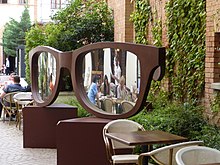
Glasses - Decoration, Presi HQ, Budapest
Many people crave spectacles for the reasons listed above. There are many shapes, colors, and materials that can be used when designing frames and lenses that can be utilized in various combinations. Frequently, the option of a frame is made based on how information technology will affect the appearance of the wearer. Some people with skillful natural eyesight similar to wear eyeglasses as a style accessory. In Japan, some companies ban women from wearing glasses.[65]
Personal image [edit]

For about of their history, eyeglasses were seen as unfashionable, and carried several potentially negative connotations: wearing glasses caused individuals to be stigmatized and stereotyped as pious clergymen, every bit those in religious vocation were the most likely to be literate and therefore the nearly likely to need reading glasses, elderly, or physically weak and passive.[66] [67] The stigma began to fall away in the U.s. of America in the early 1900s when the popular Theodore Roosevelt was regularly photographed wearing eyeglasses, and in the 1910s when pop comedian Harold Lloyd began wearing a pair of horn-rimmed glasses as the "Spectacles" character in his films.[66] [67]
In the United Kingdom, wearing glasses was characterised in the nineteenth century, as "a sure sign of the weakling and the mollycoddle", according to Neville Cardus, writing in 1928.[68] "Tim" Killick was the first professional cricketer to play while wearing spectacles "continuously", later his vision deteriorated in 1897. "With their assist he placed himself in the forefront among English professionals of all-circular abilities."[68]
Since eyeglasses have go an acceptable mode item and often act as a central component in individuals' personal image. Musicians Buddy Holly and John Lennon became synonymous with the styles of middle-glasses they wore to the signal that thick, blackness horn-rimmed glasses are ofttimes called "Buddy Holly spectacles" and perfectly round metal eyeglass frames called "John Lennon glasses" (or, more recently, "Harry Potter glasses"). British comedic actor Eric Sykes was known in the United Kingdom for wearing thick, square, horn-rimmed glasses, which were, in fact, a sophisticated hearing help that alleviated his deafness by assuasive him to "hear" vibrations.[69] Some celebrities take become then associated with their eyeglasses that they connected to habiliment them even after taking other measures against vision bug: U.s.a. Senator Barry Goldwater and comedian Drew Carey continued to wearable non-prescription glasses after being fitted for contacts and getting laser middle surgery, respectively.
Other celebrities have used spectacles to differentiate themselves from the characters they play, such as Anne Kirkbride, who wore oversized, 1980s-style round horn-rimmed glasses every bit Deirdre Barlow in the lather opera Coronation Street, and Masaharu Morimoto, who wears glasses to split up his professional person persona as a chef from his stage persona as Atomic number 26 Chef Japanese. In 2012 some NBA players wear lensless glasses with thick plastic frames like horn-rimmed glasses during post-game interviews, geek chic that draws comparisons to actor Jaleel White'southward infamous styling as TV character Steve Urkel.[70] [71]
In superhero fiction, eyeglasses have become a standard component of various heroes' disguises as masks, allowing them to adopt a nondescript demeanor when they are non in their superhero personae: Superman is well known for wearing 1950s style horn-rimmed glasses as Clark Kent, while Wonder Woman wears either round, Harold Lloyd style glasses or 1970s fashion bug-eye glasses as Diana Prince. An example of the halo upshot is seen in the stereotype that those who habiliment spectacles are intelligent. This conventionalities tin accept positive consequences for people who article of clothing glasses, for case in elections. Studies prove that wearing spectacles increases politicians' electoral success, at to the lowest degree in Western cultures.[72]
Styles [edit]
In the 20th century, eyeglasses came to exist considered a component of fashion; as such, various dissimilar styles accept come up in and out of popularity. Most are nonetheless in regular employ, admitting with varying degrees of frequency.
- Aviator sunglasses
- Browline glasses
- Issues-eye glasses
- True cat eye glasses
- GI spectacles
- Goggles
- Horn-rimmed glasses
- Lensless glasses
- Monocle
- Pince-nez
- Rimless spectacles
- Sunglasses
- Wayfarer sunglasses
- Windsor glasses
Come across also [edit]
- Adjustable-focus eyeglasses
- Baden-Powell's unilens
- Centre examination
- Eyeglass prescription
- History of optics
- X-ray vision
- Plurale tantum
Notes [edit]
- ^ Chinese judges wore dark glasses to hide their facial expressions during court proceedings.[28]
- ^ In his treatise Ad Vitellionem paralipomena [Emendations (or Supplement) to Witelo] (1604), Kepler explained how eyeglass lenses compensate for the distortions that are acquired by presbyopia or myopia, so that the image is once once more properly focused on the retina.[36] [37]
- ^ Laufer, Berthold (1907), Geschichte der Brille (PDF), vol. 6, p. 26, retrieved 29 May 2019 Translation:
I am interested in the remarks of Prof. J. HIRSCHBERG on the "History of the Invention of Glasses" published in the final event of this journal (Volume Half dozen, pp. 221–223) and the subsequent give-and-take by Prof. GÜPPERT. The volume by HIRSCHBERG mentioned therein, in which his theory should exist presented in detail, has not even so go attainable to me. I, therefore, limit my criticism of it as far every bit possible and prefer to bear witness, by ways of new material from Chinese literature, that the view of the original invention of spectacles in India is the greatest probability. HIRSCHBERG theory is highly unlikely, every bit all previous feel has shown and contradicts analogies in cultural history and in the history of inventions in particular; Crystal glasses announced in the European Centre Ages, in India, and in China, and from the historical point of view one tin suppose from the outset that these inventions did non occur independently in each of these three cultural groups, just that a historical connection is hither present.
References [edit]
- ^ "Eyeglasses - All What You Need to Know", Eyewa Blog , retrieved 24 March 2020
- ^ "Sunglasses not simply an accessory in the Sunshine State", Sun-Lookout man.com , retrieved 10 Apr 2018
- ^ Loria, Kevin (21 February 2017), "Computer glasses that claim to protect your optics from screens are selling similar crazy, but they probably aren't doing you much adept", Business concern Insider
- ^ Heiting, Gary, "Calculator Eye Strain: 10 Steps For Relief", All nearly vision.com , retrieved 1 September 2017
- ^ "BluTech Lenses – Applied science, The story backside BluTech Lenses", BluTech Lenses
- ^ a b c d e f Vimont, Celia (27 April 2017), Are Computer Glasses Worth It?, Reviewed by Rahul Khurana, MD, American University of Ophthalmology, archived from the original on 23 September 2020
- ^ Duarte, IA; Mde F, Hafner; Malvestiti, AA (2015), "Ultraviolet radiation emitted by lamps, TVs, tablets and computers: are in that location risks for the population?", An Bras Dermatol, vol. xc, no. four, pp. 595–vii, doi:10.1590/abd1806-4841.20153616, PMC4560556, PMID 26375236
- ^ a b c Porter, Daniel (16 January 2020), Blue Calorie-free and Digital Eye Strain, Reviewed past Ninel Z Gregori, Medico, American Academy of Ophthalmology, archived from the original on 28 October 2020
- ^ a b c "Bluish Low-cal Glasses - Helpful or Just Hype?", WebMD Health News, 16 Dec 2019, archived from the original on vii August 2020
- ^ Iallonardo, Marisa (24 May 2020), Practise blue low-cal spectacles work ?, Reviewed by Benjamin Bert, Doc, Business organization Insider
- ^ Hazanchuk, Vered (7 May 2019), Should You Utilise Night Mode to Reduce Bluish Low-cal?, Reviewed by Raj M Maturi, Doctor, American University of Ophthalmology, archived from the original on 8 September 2020
- ^ Porter, Daniel (15 Nov 2019), Digital Devices and Your Eyes, Reviewed by Ninel Z Gregori, Doctor, American Academy of Ophthalmology, archived from the original on 9 August 2020
- ^ Caporuscio, Jessica (2 June 2020), Medically reviewed by Ann Marie Griff, O.D, "Can blue calorie-free glasses prevent harm to optics?", MedicalNewsToday, archived from the original on 16 October 2020
- ^ Boyd, Kierstan (3 March 2020), Computers, Digital Devices and Heart Strain, Reviewed by James Thou Huffman, MD, American Academy of Ophthalmology, archived from the original on 3 October 2020
- ^ Blue blocking spectacle lenses - The Higher's position on bluish blocking spectacle lenses, archived from the original on 19 September 2020, retrieved 24 October 2020
- ^ "Is blue light from your cell phone, TV bad for your wellness?", health.ucdavis.edu , retrieved 29 September 2020
- ^ a b "Anti-glare Coating", All most Vision.com , retrieved 1 September 2017
- ^ Optical Class, OpticalCourse.com, retrieved 7 May 2014
- ^ Cable Temples, archived from the original on 27 Jan 2007, retrieved 27 January 2007
- ^ "Cable conversion temple covers", world wide web.optiboard.com
- ^ Gwamuri, Jephias; Wittbrodt, Ben T.; Anzalone, Nick C.; Pearce, Joshua M. (2014), "Reversing the Tendency of Big Scale and Centralization in Manufacturing: The Example of Distributed Manufacturing of Customizable three-D-Printable Self-Adjustable Glasses", Challenges in Sustainability, vol. 2, no. one, doi:10.12924/cis2014.02010030
- ^ Pliny the Elder. The Natural History, Book 37, Chpt.16. John Bostock and H. T. Riley, translators. London: Taylor and Francis. 1855
- ^ Grant, Edward, ed. (1974), A Source Volume in Medieval Science, Cambridge, Massachusetts: Harvard University Printing, p. 389, ISBN9780674823600 From Grant's English translation of Robert Grosseteste'due south De Iride (On the rainbow) in Latin, p. 389: "This function [viz, from Aristotle's supposed treatise on optics] of perspective, if perfectly understood, shows us how to make nearby objects announced very minor, and how to make a pocket-sized object placed at a distance announced as large as we wish, and so that information technology would exist possible to read minute messages from incredible distances or count sand, seeds, blades of grass, or any minute objects."
- ^ Bacon, Roger; Burke, Robert Belle, trans. (1962) The Opus Majus of Roger Bacon (New York: Russell & Russell, Inc.) vol. ii. Part 5, Ch. 4, p. 582. From p. 582: "For nosotros can so shape transparent bodies, and adapt them in such a way with respect to our sight and objects of vision, that the rays will exist refracted and bent in any direction we want, and under any bending, nosotros wish we shall see the object most or at a distance. Thus from an incredible distance we might read the smallest letters and number grains of dust and sand ..."
- ^ ...Eyes Highlights: II. Glasses, Academy of Maryland, Department of Electric & Figurer Engineering science, retrieved 1 September 2007
- ^ Kriss, Timothy C; Kriss, Vesna Martich (April 1998), "History of the Operating Microscope: From Magnifying Glass to Microneurosurgery", Neurosurgery, vol. 42, no. 4, pp. 899–907, doi:x.1097/00006123-199804000-00116, PMID 9574655
- ^ Ament, Phil (4 Dec 2006), "Sunglasses History – The Invention of Sunglasses", The Nifty Idea Finder, Vaunt Design Grouping, archived from the original on 3 July 2007, retrieved 28 June 2007
- ^ Needham 1962, p. 121.
- ^ "Eyeglasses | optics", Encyclopedia Britannica , retrieved eighteen Feb 2021
- ^ Ilardi 2007, p. 5.
- ^ Ilardi 2007, p. 6.
- ^ a b c Rasmussen, Seth C. (2008), "Advances in 13th Century Glass Manufacturing and Their Effect on Chemical Progress" (PDF), Message for the History of Chemistry, vol. 33, no. 1, pp. 29–34, retrieved 18 Oct 2021
- ^ Ilardi 2007, p. 9.
- ^ Petrarch (Franciscus Petrarca) mentions eyeglasses in his Epistola ad Posteros (Letter to Posterity): Petrarca, Francisci (1859), Fracassetti, Joseph (ed.), Epistolae de Rebus Familiaribus et Variae ... (in Latin), vol. 1, Florence, Italy: Felice Le Monnier, pp. ane–2,
... colore vivido inter candidum et subnigrum, vivacibus oculis et visu per longum tempus acerrimo, qui preter spem supra sexagesimum etatis annum me destituit, ut indignanti michi ad ocularium confugiendum esset auxilium.
- ^ English translation: Petrarch (1914), Robinson, James Harvey; Rolfe, Henry Winchester (eds.), Petrarch: The First Modern Scholar and Man of Messages (2nd ed.), New York: Yard. P. Putnam's Sons, p. lx,
I was possessed of a articulate complexion, between light and nighttime, lively eyes, and for long years a keen vision, which however deserted me, contrary to my hopes, later I reached my sixtieth birthday, and forced me, to my great annoyance, to resort to glasses.
- ^ Ilardi 2007, p. 244.
- ^ Ronchi, Vasco; Rosen, Edward (1991), Optics: The Scientific discipline of Vision, Mineola, New York: Dover Publications, pp. 45–46, ISBN9780486668468
- ^ "Rivet spectacles", world wide web.higher-optometrists.org, The College of Optometrists, 2015, retrieved 28 February 2015
- ^ Harford, Tim (20 November 2019), "Why exercise billions of people even so not accept glasses?", BBC News , retrieved 21 November 2019
- ^ Rosen, Edward (1956), "The invention of eyeglasses", Periodical of the History of Medicine and Allied Sciences, vol. eleven, no. ii, pp. xiii–46 (part ane), 183–218 (part 2), doi:10.1093/jhmas/eleven.2.183, PMID 13306950
- ^ Ilardi 2007, pp. xiii–18.
- ^ Needham 1962, p. 119, footnote c.
- ^ Hirschberg, Julius (1911), "Geschichte der Augenheilkunde" [History of Ophthamology], in Graef, Alfred K; Saemisch, Theodor (eds.), Handbuch der gesamten Augenheilkunde [Handbook of all ophthalmology], vol. thirteen, Leipzig, Deutschland: Wilhelm Engelmann, pp. 265 ff Section Geschichte der Brillen (History of Eyeglasses) From pp. 266–267 (translated): "3. Do the Europeans have the Chinese to thank for eyeglasses? ... Messrs. Scrini and Fortin in Paris take asserted this recently with the words: 'One knows, on the other mitt, that when Marco Polo went to China, he learned that for a very long fourth dimension already, the inhabitants had been using eyeglasses.' This assertion lacked any substantiation. So I have closely perused the German language translation of 'the books of Marco Polo' (second ed., Leipzig 1855) in one case again as well every bit carefully compared [that book] to the original text (the book of Marco Polo by Pauthier, Paris 1865, 2 volumes): not a syllable about eyeglasses in China is establish therein. Our highly esteemed Sinologist, Prof. Graube, had the kindness to peruse likewise the English edition (past Yule, London 1875), with the same negative consequence. Thus the sentence of Messrs. Scrini and Fortin is to be crossed out; this error may not exist the only 1 to have infiltrated the literature."
- ^ Needham 1962, p. 119.
- ^ Laufer, Berthold (1907). "Geschichte der Brille" [History of eyeglasses]. Mitteilungen zur Geschichte der Medizin und der Naturwissenschaften [Communications on the History of Medicine and the Sciences], 6 (iv) : 379–385.
- ^ Scientific discipline and Civilization in China Vol 4.1 (PDF), pp. 118–119, archived from the original (PDF) on 23 August 2016, retrieved three May 2014
- ^ Agarwal, R. K. (1971). "Origin of spectacles in Bharat". British Periodical of Ophthalmology, 55 (two): 128–129. National Center for Biotechnology Information.
- ^ Renaissance Vision from Glasses to Telescopes, Vincent Ilardi, American Philosophical Gild 2007 pages 118–125
- ^ The 'Inventor' of Bifocals?, The College of Optometrists, archived from the original on xiii June 2011
- ^ Bruen, Robert, "Sir George Biddell Blusterous", The Lucasian Chair of Mathematics at Cambridge University, Robert Bruen, retrieved 1 January 2014
- ^ Eyeglass Lenses and Visual Aids from Industrial Production, Zeiss, retrieved 2 September 2007
- ^ Whiteman, Honour (12 November 2015), "Cocky-adjustable eyeglasses: how one man's vision is helping others to run into better", Medical News Today, Cerise Ventures, retrieved 25 Oct 2021
- ^ a b c d e f g Pullin, Graham; et al. (2009), "Fashion Meets Discretion", Design Meets Disability, Cambridge: MIT Press, pp. 13–64, ISBN9780262162555
- ^ Benham, Lee (1972), "The Effects of Ad on the Toll of Eye Glasses", Journal of Law and Economics, vol. 15, no. two, pp. 337–52, doi:10.1086/466740, S2CID 154878241
- ^ Hutchinson, Dr Emma; Hutchinson, University of Victoria and; Emma (2017), "8.i Monopoly", Principles of Microeconomics , retrieved 6 May 2021
- ^ Swanson, Ana, "Meet the Four-Eyed, Eight-Tentacled Monopoly That is Making Your Spectacles So Expensive", Forbes , retrieved 6 May 2021
- ^ "Is Luxottica A Monopoly?", Financhill, 19 January 2021, retrieved 6 May 2021
- ^ "Does Luxottica Own 80% of the Eyeglass Industry?", snopes.com
- ^ "Why are glasses so expensive?", CBS News
- ^ "Sticker shock: Why are glasses and then expensive?", hr, CBS News, 7 October 2012, retrieved nineteen October 2012
- ^ Lions Eyeglasses Recycling Facts, Lions Clubs International, retrieved xx Baronial 2008
- ^ Donate Eyeglasses and Sunglasses, Unite For Sight, archived from the original on twenty Baronial 2008, retrieved twenty Baronial 2008
- ^ The world's online database of high quality used glasses, ReSpectacle, retrieved 11 July 2017
- ^ "Brick Honor Winner: Jennifer Staple", People: practice something, HowStuffWorks, 20 February 2007, retrieved 20 August 2008
- ^ Steger, Isabelle (7 November 2019), ""It gives a cold impression": Why Japanese companies ban female person staff from wearing glasses", Quartz (publication) , retrieved 7 Nov 2019
- ^ a b "Understanding Three-Slice Mounting", Eyewear, Seiko, archived from the original on 28 October 2008
- ^ a b Lloyd, Annette (1996), The Fashion of Harold Lloyd
- ^ a b "The Spin | Tim Killick, the bespectacled rogue who got clattered for 34 in an over", the Guardian, 7 July 2020
- ^ Sykes, Eric (31 Dec 2004), "Comedy Dandy", News, BBC
- ^ Archived at Ghostarchive and the Wayback Machine: "Whacky NBA Playoff Manner!", YouTube , retrieved 26 June 2012
- ^ Cacciola, Scott (xiv June 2012), "NBA Finals: LeBron James, Dwyane Wade and Other Fashion Plates of the NBA Brand Specs of Themselves", The Wall Street Journal (online ed.), retrieved 26 June 2012
- ^
General bibliography [edit]
- Ilardi, Vincent (2007), Renaissance Vision from Spectacles to Telescopes, Philadelphia, Pennsylvania: American Philosophical Society, ISBN9780871692597 .
- Needham, Joseph (1962), "Part 1", Science & Civilization in Communist china, vol. Iv, Cambridge, England: Cambridge University Press, ISBN9780521058025 .
External links [edit]

 | Wikimedia Commons has media related to Glasses. |
 | Wikiquote has quotations related to: Glasses |
- Spectacles Gallery at the British Optical Association Museum
- "Spectacles", The Medieval Technology, NYU, archived from the original on 16 Oct 2015, retrieved 15 June 2009 .
- "Are Your Eyes Correct", Popular Science (article), February 1944 , on eyes and how eyeglasses correct vision (page 120).
- "Mutual Spectacles Styles before, during and after the Civil War" (2012 commodity) via the Internet Annal; Antiquarian Eyeglasses in America.
Source: https://en.wikipedia.org/wiki/Glasses
0 Response to "Eyeglass Strap With Make America Great Again"
Post a Comment